Refreshment focuses on the water dispenser/cooler, office coffee service and vending sectors, while also taking an in-depth look into products for vending from bottled water and drinks, to snacks and confectionery. It also focuses on hydration, health and wellness, new technologies and environmental and social responsibility issues.


Research
Coffee & tea



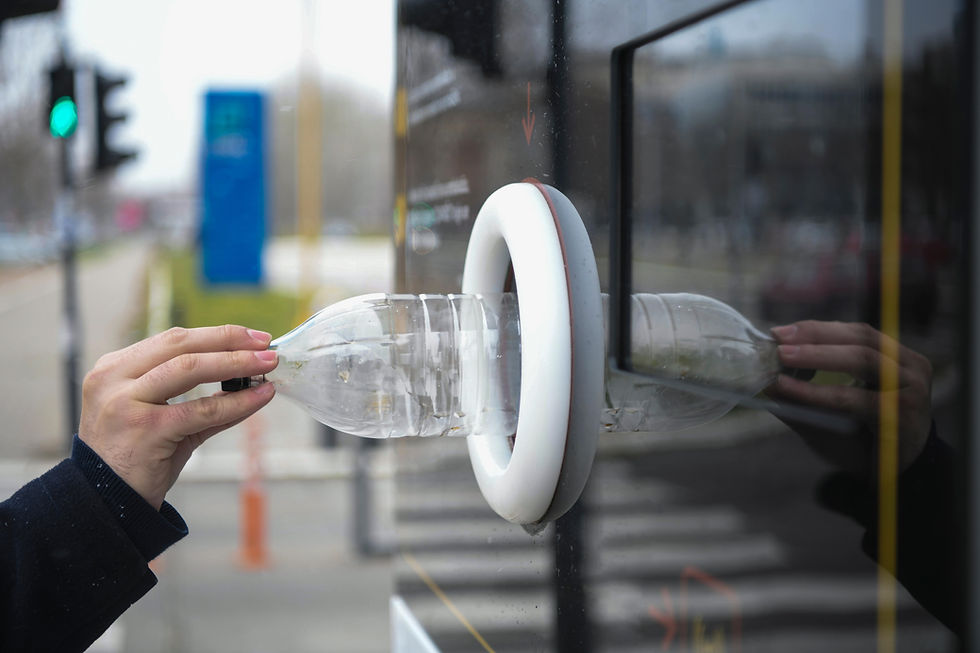
The UK’s Deposit Return Scheme (DRS) is moving closer to implementation, but meeting its recycling ambitions will require significant investment in collection and processing infrastructure. With the October 2027 launch approaching, equipment suppliers and retailers must prepare for the operational and financial demands of deploying reverse vending machines and supporting systems at scale. Kathryn Vassilissin, vendor finance at Siemens Financial Services UK, examines the infrastructure requirements, lessons from established European schemes and the financing options that could help businesses prepare for the transition.
Delivering the environmental benefits of the DRS will depend on more than consumer participation. Equipment manufacturers, technology providers and infrastructure partners will play a critical role in enabling collection at scale, supplying the systems needed to collect, process and account for billions of returned containers.
With the scheme due to launch in October 2027, the challenge is not just delivering the right equipment, but ensuring businesses can afford the investment needed to make it work.
UK preparations: Targets, specifications and collection infrastructure
The UK’s DRS will introduce a refundable deposit of 20p on eligible single-use drinks containers from 1 October 2027. In England, Northern Ireland and Scotland, the scheme will cover PET plastic bottles, and steel and aluminium cans, between 150ml and 3 litres. In Wales, glass will also be included, though with a phased transition over 2027-2031.
The scale of the task is considerable. Consumers in England, Northern Ireland and Scotland buy an estimated 30 billion single-use drinks containers each year, with around 6.5 billion bottles and cans going unrecycled. To address this, Exchange for Change, the organisation responsible for managing DRS implementation, is targeting return rates of 70% in the first year, 80% in the second and 90% thereafter.
Preparations are already under way. Reverse vending machines will be an important part of DRS infrastructure, allowing consumers to return eligible empty drinks containers through automated collection points.
Accordingly, Exchange for Change published technical and performance specifications for reverse vending machines in October 2025, followed by material specifications in April 2026, and most recently, artwork guidelines for branding consistency. The organisation has now published its first list of certified reverse vending machines, with more to come.
Measures to ease installation have been announced. In England, qualifying reverse vending machines can now be installed at shops without a full planning application, provided they meet specific conditions on size and location. Scotland has similar, though not identical, permitted development rights.
The wider collection and processing network is also taking shape. Exchange for Change appointed five recycling and waste-management providers in September 2026. The planned network is expected to include around 400 collection vehicles and six dedicated or shared-use processing facilities and lines, with around 700 new jobs forecast.
For equipment suppliers, these developments clarify the decisions their retail customers now face: where to locate collection points, which equipment suits each site, how much capacity they require and how to manage ongoing operations.
With specifications published and implementation plans advancing, addressing installation and maintenance costs ahead of launch will be an increasingly important part of making projects viable.
International lessons: The role of reverse vending
International experience shows that deposit return schemes can achieve high collection rates. But success depends on having the right collection and processing infrastructure in place.
Norway introduced its scheme in 1999 and achieved a collection rate of 98% for aluminium and plastic bottles in 2025, according to its operator, Infinitum. Although manual collection points significantly outnumber automated locations, reverse vending machines account for 94% of returned containers.
Germany, which introduced its scheme in 2003, also achieves a return rate of around 98%, with reverse vending machines handling approximately 90% of returns. Across Europe, beverage container return rates average 87%, according to Reloop.
These figures demonstrate the level of infrastructure investment underpinning high-performing schemes.
Infrastructure cost: How to finance the transition
For technology providers, the challenge is not only to supply the right equipment but to help customers manage the cost of installing and maintaining it. Installing reverse vending machines will require significant investment.
In 2024, the government estimated that a machine for a small convenience store would cost around £14,000. For a large supermarket, a machine with four in-feeds could cost £84,000, plus £70,000 for outdoor housing.
The wider investment requirements are substantial. Across England and Northern Ireland, the estimated capital cost reached £700 million for machines and £600 million for logistics. These figures highlight the scale of the opportunity for vending machine manufacturers and operators, but also the financial challenge facing businesses that need to invest in the infrastructure.
The initial purchase price is only part of the equation. Businesses must also budget for software, maintenance and the staff time needed to manage returns. While handling fees will help cover some costs, they may not be enough to offset the full investment.
Under the announced fee structure, operators of reverse vending machines will receive 5p per container for the first 225,000 items returned annually, falling to 1.3p for each additional item.
Manual return points will receive 3p per container. Smaller retailers can apply for support through a £60 million fund, offering grants of up to £6,000 to help eligible independent retailers purchase reverse vending machines.
However, many businesses will still need to finance a substantial share of the expenditure, alongside other regulatory and operational expenses. Integrating financing options with equipment and maintenance packages could help end customers spread the upfront investment over time and make the transition more manageable.
Integrating equipment and finance decisions
The UK’s DRS will depend on more than consumers returning their empty containers. The technology needed to support the scheme already exists but deploying it at scale will require significant investment across retail sites, collection networks and processing operations.
For manufacturers and technology providers, the task is to connect equipment decisions with customers’ financing needs. Flexible purchasing and financing options could help spread expenditure over time and make investment more achievable.
That does not remove the need for careful planning. The financial case will depend on each customer’s expected return volumes, handling-fee income, operating costs and repayment commitments.
Early planning across the drinks value chain can bring those decisions together so that infrastructure is ready for the scheme’s launch.

Related posts