Refreshment focuses on the water dispenser/cooler, office coffee service and vending sectors, while also taking an in-depth look into products for vending from bottled water and drinks, to snacks and confectionery. It also focuses on hydration, health and wellness, new technologies and environmental and social responsibility issues.


Research
Coffee & tea




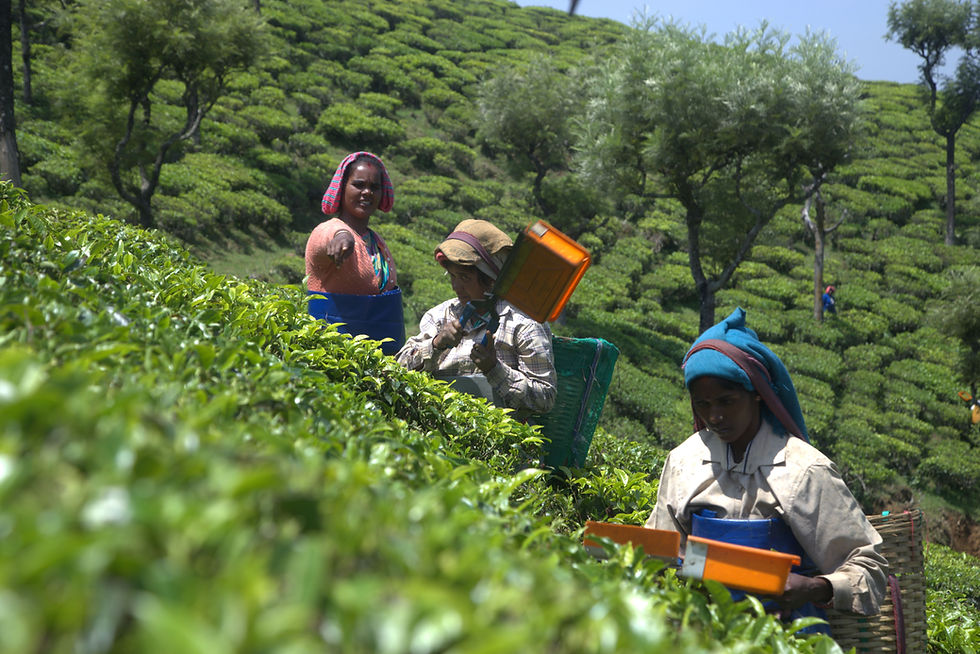
As climate change and economic uncertainty put increasing pressure on tea-growing communities, Bryan Martins, CEO of Ecotone UK, owner of Clipper Teas, argues that expanding Fairtrade-certified tea could help build more resilient supply chains and secure the industry's future.
When the news broke recently that the government has committed to introduce mandatory human rights due diligence legislation, it felt like an important step towards greater accountability for businesses and the protection of workers across global supply chains – something myself and my colleagues at Clipper have been campaigning for alongside the Fairtrade Foundation.
But there is some disappointment too. Environmental responsibility has not been included in the government's proposed framework. This overlooks the intrinsic relationship between livelihoods, health and the natural environment that farmers depend upon.
Fairtrade recently disclosed that, following a particularly hot summer, over a quarter of consumers are now more concerned about the impact of climate change on UK food supplies. With more unpredictable weather patterns in our future, I expect this concern will grow.
We’ve all heard scientists say that there is a window of opportunity to act if we do something about it. In the tea industry, there is one clear thing that we can do, and that’s choosing organic and Fairtrade tea.
Buying more tea on Fairtrade terms, would mean more contributions to the Fairtrade Premium – allowing more funds to be allocated towards organic and sustainable farming methods and technologies that support climate mitigation.
It’s been great to see the environmental impact that Clipper’s Fairtrade Premium contributions have had on tea estates – from organic farming methods that support biodiversity to planting trees. The Fairtrade Premium can help farmers to adapt to the changing conditions that threaten their livelihoods and, ultimately, our future supply of tea.
For that pot to grow, more tea needs to be sold on Fairtrade terms.
Scale matters; the bigger the market, the bigger the difference
It’s frustrating really – Fairtrade tea is a truly untapped opportunity.
Today, only around 10% of tea sold in the UK is Fairtrade. Yet Fairtrade tea sales grew by 35% in 2025 – equivalent to 549 million additional cups. What this shows is that consumers are willing to choose Fairtrade when the option is there.
And scale matters. Because the more the Fairtrade market grows, the more the industry can put meaningful investment back into the communities that grow tea.
With Sainsbury’s own-brand black tea now Fairtrade certified again, the retailer is expected to generate more than £1 million a year in Fairtrade Premium for tea farmers and workers. It makes Sainsbury’s the UK’s largest grocery retailer of Fairtrade tea.
This is a good example of how a major player can truly drive positive change. I would love to see others follow.

A collective effort to create resilience
The entire industry has a shared responsibility and interest in supporting tea farmers who make tea possible, bear the brunt of climate change.
Fairtrade’s new Global Strategy for 2026-2028, Catalyst for Resilience, feels particularly timely. Its focus on sustainable livelihoods, stronger supply chains and collective commitment reflects the reality we now face. Climate change, geopolitical instability and economic uncertainty are not future risks. They are already affecting farmers, workers and global food supply chains.
Creating more resilient supply chains, is not just the right thing to do, it’s actually the smart thing to do. For tea to stay available, affordable and sustainable, there needs to be more investment in the people and places where tea is sourced.

Related posts