Refreshment focuses on the water dispenser/cooler, office coffee service and vending sectors, while also taking an in-depth look into products for vending from bottled water and drinks, to snacks and confectionery. It also focuses on hydration, health and wellness, new technologies and environmental and social responsibility issues.
.png)

Research
Coffee & tea

%20(1).jpg)


As consumers seek functional benefits beyond a traditional caffeine boost, coffee is becoming an increasingly popular platform for ingredients that support energy, focus and wellbeing. One ingredient attracting growing interest is Rhodiola rosea, an adaptogenic plant traditionally used to help the body manage physical and mental stress.
Research suggests it may support mental energy, reduce fatigue and enhance cognitive performance, making it a natural complement to caffeine. While caffeine delivers rapid stimulation and alertness, Rhodiola rosea works through different physiological pathways that may help sustain energy and resilience to stress.
Refreshment spoke with Elena García, scientific product and communication manager at Nektium, about the company's Rhodiolife ingredient, the opportunities for adaptogens in coffee and where the functional coffee category is headed next.
Nektium has recently showcased Rhodiolife coffee concepts. What made coffee the natural next step for this ingredient?
Rhodiola rosea is one of nature’s most powerful adaptogens, which are plants that help the body adapt to mental and physical stress. Clinical studies show our Rhodiolife Rhodiola rosea root extract has benefits for mental energy, stress and athletic performance, improving recovery and increasing immune protection after exercise.
Those qualities make it a great option for coffee as it complements caffeine’s benefits for energy, alertness and focus. When combined, they create a powerful synergistic effect that optimises energy and performance. The two substances work beautifully together because they operate through complementary physiological pathways.
Caffeine acts primarily on the central nervous system as a stimulant by antagonising adenosine receptors, which promotes the release of neurotransmitters to increase alertness and muscle contraction force.
Rhodiola rosea works at the cellular and metabolic levels to improve the body's resistance to stress, stimulate ATP synthesis in the mitochondria, improve oxygen utilisation and provide antioxidant defence.
A recent clinical study on boxing also showed that supplementing with Rhodiola rosea and caffeine significantly enhances both explosive power and sustained output. This indicates synergies between the two ingredients that create new product development opportunities for coffee and sports nutrition applications featuring Rhodiolife.

Functional coffee continues to expand beyond caffeine alone. How do you see consumer expectations changing in this category?
There’s such huge demand for coffee worldwide that it opens up significant opportunities for product differentiation.
Mushroom coffee is a growing trend, for example, with manufacturers adding adaptogenic and nootropic mushrooms to the coffee beans to provide a smoother, calmer experience.
Rhodiolife plays a similar role, turning that morning coffee into something smarter. Caffeine provides the spark, and the Rhodiola rosea helps sustain the effect and provide a smoother experience without the stress and the crash. It’s experiential, too, which gives it a distinct advantage over other adaptogens.
How does Rhodiolife complement caffeine in coffee formulations, particularly around energy, focus and resilience to stress?
Rhodiolife is scientifically proven to relieve stress, sustain mental energy, help reduce fatigue and enhance memory. Interestingly, it’s been shown to cause a rapid onset of brain activation, with an EEG signature very similar to caffeine, which highlights the potential for synergistic effects when used in combination with caffeine.
Many consumers want energy without the crash. Could Rhodiola rosea help brands create a smoother coffee experience?
Rhodiola rosea offers a highly promising avenue for brands looking to create a smoother, "crash-free" product or enhance the traditional coffee experience.
By blending Rhodiolife with coffee or caffeine-based beverages, brands could leverage these mechanisms to provide the sharp cognitive and physical activation that consumers expect from caffeine, while utilising Rhodiola rosea's adaptogenic properties to stabilise energy metabolism, prevent fatigue accumulation and help eliminate the dreaded post-stimulant crash.
Zynamite, our mango tree leaf extract, is another botanical that’s ideal for providing a smoother coffee experience. It offers clinically proven benefits for non-stimulant energy without crashes or jitters. These include enhanced attention, concentration and working memory, faster thinking and reaction times, and greater cognitive flexibility.
Zynamite activates brain waves in an almost identical pattern to caffeine, but through a different mechanism of action. This produces mental benefits that are broader and longer lasting than those from caffeine, with no sleeplessness or nervousness issues.
Zynamite acts in synergy with caffeine and so can be used to reduce a product’s caffeine content. We’ve developed a water-soluble grade that’s ideal for use in beverages including coffee and tea.
From a formulation perspective, what are the main challenges when incorporating Rhodiola rosea into coffee, whether in instant, pods or RTD formats?
Historically, production of beverages using Rhodiola rosea has been associated with challenges around flavour, colour, pH and bioactive stability.
We developed a water-soluble form of Rhodiolife that overcomes these challenges by delivering shelf-stable flavour, colour and bioactive content, without affecting pH, Brix or microbiological activity. It’s also unaffected by pasteurisation. This makes it possible to harness the benefits of Rhodiola rosea in virtually any beverage application, including all coffee formats.
Taste can be critical in coffee innovation. How has Nektium approached flavour and sensory performance when pairing Rhodiola rosea with coffee?
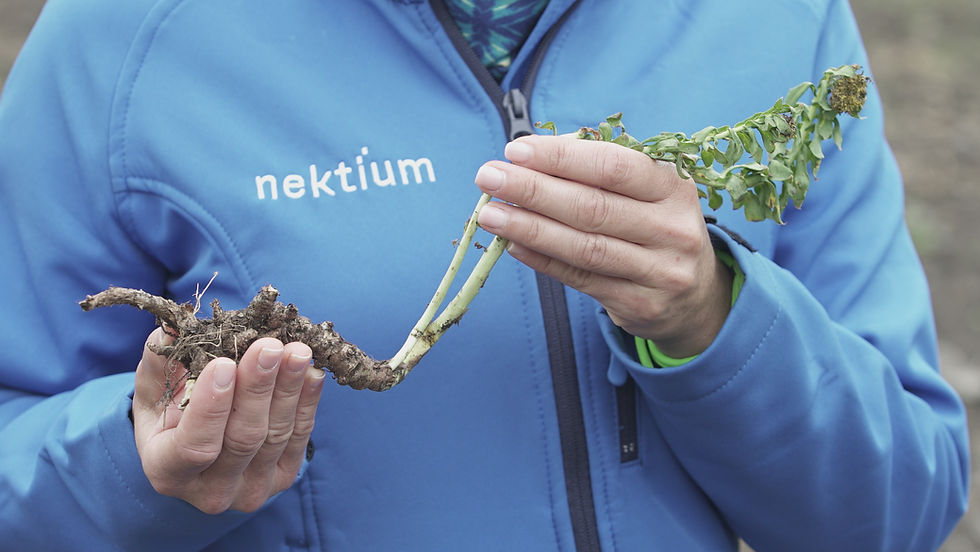
The active compounds in powerful adaptogens such as Rhodiola rosea are found in the roots and can therefore have a bitter flavour. Historically, this has tended to make them less suitable for taste-centred products such as coffee.
Application trials carried out over a 12-month period for our water-soluble Rhodiolife have demonstrated that it has no noticeable impact on beverage flavour. There was also very little impact on appearance, including colour stability, over the same time frame.
Sustainability is increasingly important in both coffee and botanicals. How does Nektium approach sourcing and traceability for Rhodiolife?
The rapidly growing market for Rhodiola rosea has put pressure on supplies in general, leading to concerns about over-harvesting. Since February 2023, Rhodiola rosea has been listed as a protected species by CITES, the Convention on International Trade in Endangered Species of Flora and Fauna.
All of Nektium’s Rhodiola rosea raw materials are CITES-compliant and fully documented, following authorised collection and export requirements, and the controlled wild-harvesting programme ensures a sustainable and traceable supply.
Our rigorous authentication system includes macroscopic ID, DNA barcoding, HPLC fingerprinting and HPTLC tests to ensure ingredient identity and consistent quality through all of these complementary methodologies.
In addition, we’ve become one of the first companies in the botanical sector to secure B Corp status, following a stringent assessment of our social and environmental performance, legal accountability and public transparency.
By meeting these requirements, we can help our customers meet their own corporate social responsibility obligations and assure them that we maintain a robust, ethical operation across every dimension of our business.
Looking ahead, how do you expect the functional coffee category to evolve over the next three to five years, and what role could ingredients like Rhodiolife play?
We’re really starting to see brands explore what functional benefits coffee can offer beyond stimulation. Protein coffee has hit the mainstream now, and collagen, probiotic and immunity-boosting coffee formulations are gaining ground too.

Related posts


Interview: Connect Vending’s Elyas Coutts on the rise of healthy workplace vending in the UK
Connect Vending's CEO, Elyas Coutts, discusses how employee expectations are shifting, which healthier categories are performing best and how technologies such as micro-markets and smart fridges are reshaping workplace refreshments.

“Better to light a candle than curse the darkness” – Waiākea CEO Ryan Emmons on tackling packaging’s imperfect realities
CEO and co-founder Ryan Emmons discusses how the Hawaii-based company expanded from a local start-up into a B Corp–certified brand promoting circular packaging and community impact.